
Protozoa: Key Characters and Reproduction
Quick answer: Protozoa are single-celled, microscopic animal-like protists — traditionally grouped with the animals — carrying out every life function inside one cell. They move with pseudopodia ("false feet"), cilia or flagella, and reproduce mainly by binary fission — some by conjugation or spore formation. This is a plain-language overview of protozoan characteristics, from locomotion to reproduction.
- Protozoa are unicellular, eukaryotic animals with a protoplasmic grade of organization — one cell does everything.
- Locomotion defines the groups: pseudopodia (Amoeba), flagella (Euglena, Trypanosoma), cilia (Paramecium), or none (Plasmodium).
- Nutrition: holozoic (animal-like), holophytic (plant-like, Euglena), saprozoic or parasitic.
- Freshwater protozoa pump out excess water with contractile vacuoles — a neat example of osmoregulation.
- Reproduction is mostly asexual (binary fission, multiple fission, budding); sexual reproduction occurs via syngamy or conjugation (Paramecium).
Every animal you know is a city of trillions of specialized cells. Now imagine one creature running the entire city alone — hunting, digesting, sensing danger, balancing water, reproducing — all inside one microscopic cell. That is a protozoan, from the malaria parasite Plasmodium to the pond-water Paramecium.
These notes belong to the Animal Diversity series, where each phylum gets the same clear treatment — start here, then meet the sponges and jellyfish.
What Are Protozoa?
Protozoa (Greek protos = first, zoon = animal) are unicellular eukaryotes traditionally regarded as the most primitive animals. One cell performs every vital activity — with no division of labour — the protoplasmic grade of organization.
Protozoa live wherever water is found — ponds, oceans, damp soil, and inside other animals as parasites. In Whittaker's system they sit in Kingdom Protista; the classical four-group classification is based on locomotion.
General Characters of Protozoa
The general characteristics of protozoa — one-celled organization, distinctive locomotion, flexible nutrition and simple reproduction — are summarized in this checklist:
- Unicellular and eukaryotic: a single cell with a true nucleus; mostly microscopic.
- Body covering: naked or with a flexible pellicle; some secrete shells or form protective cysts.
- Symmetry: variable — asymmetrical (Amoeba), bilateral or radial.
- Nutrition: holozoic (ingesting food), holophytic (photosynthetic — Euglena), saprozoic or parasitic.
- Digestion: intracellular, inside food vacuoles.
- Respiration and excretion: by simple diffusion across the body surface.
- Osmoregulation: freshwater forms use contractile vacuoles to pump out excess water entering by osmosis (see osmoregulation in freshwater and marine animals).
- Reproduction: mainly asexual; sexual methods occur in several groups.
Locomotion in Protozoa
How a protozoan moves is so fundamental that the whole phylum is classified by it:
| Locomotory organ | How it works | Group | Examples |
|---|---|---|---|
| Pseudopodia ("false feet") | Temporary cytoplasmic projections; the cell streams forward | Sarcodina | Amoeba, Entamoeba |
| Flagella | Long whip-like structures lashing to move the cell | Mastigophora | Euglena, Trypanosoma |
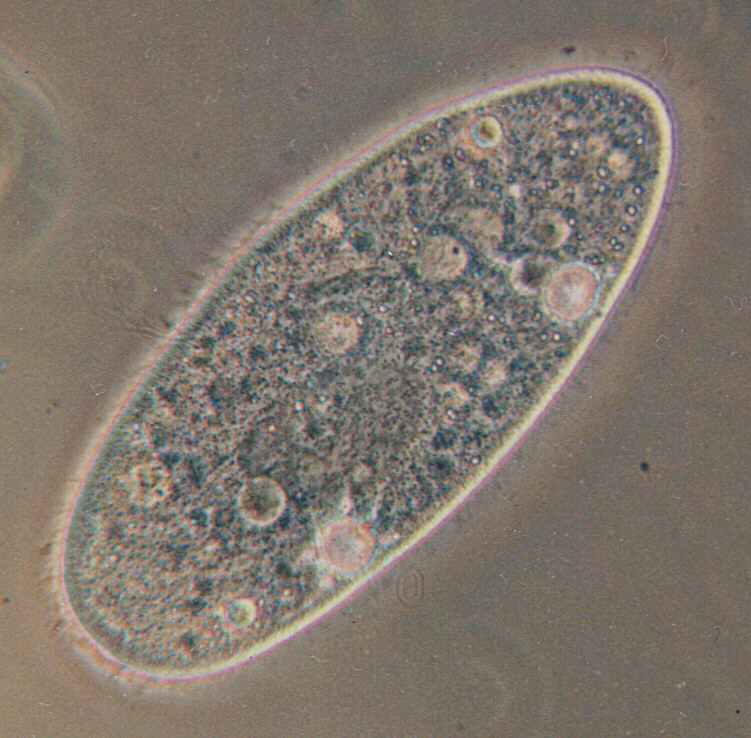
| Cilia | Short hair-like structures beating in coordinated waves | Ciliophora | Paramecium |
| None (adult) | No locomotory organelles; slow gliding | Sporozoa | Plasmodium — all parasitic |
The exam logic is neat: each locomotory organ names its group, and each group supplies its famous example — Amoeba, Euglena, Paramecium, Plasmodium.

Nutrition in Protozoa
Protozoa show remarkable flexibility in how they obtain food. Four nutritional modes occur:
- Holozoic nutrition: animal-like feeding by ingesting solid food particles. Amoeba flows its pseudopodia around bacteria and algae; Paramecium uses cilia to sweep food into its oral groove. Digestion is intracellular, inside food vacuoles.
- Holophytic nutrition: plant-like photosynthesis using chloroplasts. Euglena viridis is the classic example — it photosynthesizes in sunlight but can absorb dissolved organics in the dark, making it mixotrophic.
- Saprozoic nutrition: absorbing dissolved organic matter from decaying material through the body surface.
- Parasitic nutrition: absorbing nutrients from a host's body. Plasmodium feeds on haemoglobin inside red blood cells; Trypanosoma absorbs nutrients from blood plasma.
Osmoregulation and Other Life Processes
A freshwater protozoan is saltier than its surroundings, so water leaks in by osmosis. The contractile vacuole collects and expels the excess in pulses — without it, the cell would burst. This is a textbook example of osmoregulation at the single-cell level.
Respiration and excretion happen by simple diffusion across the body surface — no lungs, no kidneys, just the cell membrane doing everything.
Free-Living or Parasitic? Meet Six Famous Protozoa
| Protozoan | Life style | Locomotion | Why it matters |
|---|---|---|---|
| Amoeba proteus | Free-living in pond water | Pseudopodia | The classic school-microscope specimen |
| Paramecium caudatum | Free-living in pond water | Cilia | Famous for conjugation and contractile vacuoles |
| Euglena viridis | Free-living, photosynthetic | Flagella | Half plant, half animal — the mixotroph |
| Plasmodium spp. | Parasitic (mosquito–human) | None (adult) | Causes malaria |
| Trypanosoma brucei | Parasitic (tsetse fly–human) | Flagella | Causes sleeping sickness |
| Entamoeba histolytica | Parasitic (human gut) | Pseudopodia | Causes amoebic dysentery |
Reproduction in Protozoa
Protozoa reproduce chiefly asexually:
- Binary fission: the cell divides into two daughters — longitudinal in Euglena, transverse in Paramecium, irregular in Amoeba.
- Multiple fission: the nucleus divides repeatedly, then the cytoplasm splits into many daughters — common in Plasmodium.
- Budding: a small outgrowth forms and pinches off (seen in some suctorians).
Sexual reproduction also occurs: syngamy (fusion of gametes) and the famous conjugation of Paramecium, in which two cells temporarily join and exchange nuclear material.
For contrast with multicellular body plans built from these same basic cell types, explore the Animal Diversity notes on sponges and cnidarians.
Frequently Asked Questions
What are protozoa in simple words?
Single-celled, microscopic animal-like protists: one eukaryotic cell that moves, feeds, digests, balances water and reproduces. Examples: Amoeba, Paramecium, Euglena, Plasmodium.
How do protozoa move?
By four methods: pseudopodia or "false feet" (Amoeba), flagella or whip-like tails (Euglena, Trypanosoma), cilia or tiny beating hairs (Paramecium), or no locomotory organs at all in the adult stage (Plasmodium and other Sporozoa).
What is the function of the contractile vacuole?
It performs osmoregulation in freshwater protozoa: collecting excess water entering by osmosis and pumping it out in pulses, preventing the cell from bursting.
How do protozoa reproduce?
Mostly asexually by binary fission (splitting in two), multiple fission or budding. Sexual reproduction occurs through syngamy (fusion of gametes) or conjugation — the temporary union and nuclear exchange seen in Paramecium.
Why are some protozoa harmful to humans?
Plasmodium causes malaria, Entamoeba histolytica amoebic dysentery, Trypanosoma sleeping sickness, Giardia giardiasis and Leishmania leishmaniasis.
Is Protozoa a valid taxonomic group in modern classification?
Not as a single natural group. "Protozoa" is a traditional, paraphyletic grade: modern molecular phylogeny splits these single-celled eukaryotes across several supergroups (Amoebozoa, Excavata, SAR and others), so it is used as a convenient ecological term for animal-like protists rather than a true phylum or kingdom.
Practice MCQs
Q1. The locomotory organ of Amoeba is the:
- Cilia
- Flagella
- Pseudopodia
- Setae
Answer: C — Amoeba moves by temporary cytoplasmic projections (pseudopodia).
Q2. Paramecium moves by means of:
- Pseudopodia
- Cilia
- Flagella
- Tube feet
Answer: B — Its thousands of cilia beat in coordinated waves.
Q3. Sexual reproduction by conjugation occurs in:
- Amoeba
- Euglena
- Paramecium
- Plasmodium
Answer: C — Two cells temporarily unite and exchange nuclear material.
Q4. The contractile vacuole in freshwater protozoa functions in:
- Digestion
- Osmoregulation
- Locomotion
- Reproduction
Answer: B — It expels excess water entering by osmosis.
Q5. Members of Sporozoa (e.g., Plasmodium) are characterized by:
- Presence of cilia
- Absence of locomotory organs in the adult stage
- Presence of pseudopodia
- Two contractile vacuoles
Answer: B — Adult sporozoans lack locomotory organelles; all are parasitic.
Q6. Euglena shows which type of nutrition?
- Holozoic
- Holophytic (photosynthetic)
- Parasitic
- Saprozoic only
Answer: B — Euglena photosynthesizes like a plant (also absorbing organics: mixotrophic).
Q7. Binary fission in Paramecium is:
- Longitudinal
- Transverse
- Irregular
- Oblique
Answer: B — Paramecium divides transversely; flagellates like Euglena longitudinally.
Q8. In Whittaker's five-kingdom system, protozoa are placed in:
- Monera
- Protista
- Fungi
- Animalia
Answer: B — Unicellular eukaryotes, including protozoa, belong to Kingdom Protista.
Q9. Multiple fission, seen in Plasmodium, involves:
- Two cells joining and exchanging nuclei
- A small outgrowth pinching off
- The cell dividing transversely in two
- The nucleus dividing repeatedly, then the cytoplasm splitting into many daughters
Answer: D — In multiple fission the nucleus divides repeatedly first, and only then does the cytoplasm split into many daughters.
Q10. In protozoa, intracellular digestion takes place inside:
- The contractile vacuole
- The pellicle
- Food vacuoles
- Cysts
Answer: C — Captured food is enclosed in food vacuoles, where intracellular digestion occurs.
Short Questions
Q1. What are protozoa, and why are they called the "first animals"? See answer
Protozoa (Greek protos = first, zoon = animal) are unicellular, eukaryotic microorganisms traditionally regarded as the most primitive animal-like organisms. They belong to Kingdom Protista in Whittaker's five-kingdom system.
Each protozoan is a single cell that performs every life function — locomotion, nutrition, digestion, osmoregulation, and reproduction — with no division of labour between cells. This is called the protoplasmic grade of organization.
Famous examples include Amoeba, Paramecium, Euglena, and the malaria parasite Plasmodium. They live in ponds, oceans, damp soil, and inside other animals as parasites.
Q2. Name the four types of locomotory organelles in protozoa, with one example of each. See answer
Protozoa are classified into four groups based on their locomotory organelles: (1) Pseudopodia ("false feet") — temporary cytoplasmic projections used by Amoeba and Entamoeba (group Sarcodina).
(2) Flagella — long, whip-like structures that lash to propel the cell, seen in Euglena and Trypanosoma (group Mastigophora). (3) Cilia — short, hair-like structures beating in coordinated waves, characteristic of Paramecium (group Ciliophora).
(4) None — adult sporozoans like Plasmodium lack locomotory organelles entirely and move only by slow gliding (group Sporozoa, all parasitic).
Q3. Describe the four modes of nutrition in protozoa. See answer
Holozoic nutrition is animal-like feeding on solid food: Amoeba engulfs bacteria with pseudopodia, while Paramecium sweeps food into its oral groove with cilia. Digestion is intracellular, inside food vacuoles.
Holophytic nutrition is plant-like photosynthesis: Euglena viridis uses chloroplasts to photosynthesize in light, switching to absorbing dissolved organics in darkness (mixotrophic).
Saprozoic nutrition involves absorbing dissolved organic matter through the body surface, while parasitic nutrition means feeding on a host — Plasmodium digests haemoglobin inside red blood cells.
Q4. How do freshwater protozoa perform osmoregulation? See answer
Freshwater protozoa face a constant osmotic challenge: their cytoplasm is saltier than the surrounding pond water, so water continuously enters the cell by osmosis across the semi-permeable cell membrane.
To prevent bursting, they use contractile vacuoles — specialized organelles that collect the excess water and pump it out in rhythmic pulses. Paramecium has two prominent contractile vacuoles with radiating canals.
This is a classic single-cell example of osmoregulation — the active control of water balance. Marine protozoa, living in salty water, generally lack contractile vacuoles.
Q5. How does Paramecium reproduce sexually by conjugation? See answer
Conjugation is the sexual process of Paramecium in which two compatible cells temporarily join at their oral grooves and form a cytoplasmic bridge between them.
Through this bridge, the two cells exchange haploid micronuclei produced by meiosis. After exchange, the partners separate, and each reorganizes its nuclear apparatus with the new genetic combination.
Conjugation does not increase cell number — it rejuvenates the participants and creates genetic variation, unlike asexual binary fission which simply produces two identical daughters by transverse division.
Q6. Name three parasitic protozoa and the human diseases they cause. See answer
Plasmodium species cause malaria — the female Anopheles mosquito injects sporozoites that multiply in liver cells and then destroy red blood cells in cycles of fever and chills.
Entamoeba histolytica causes amoebic dysentery by invading the human large intestine, while Trypanosoma brucei, transmitted by the tsetse fly, causes African sleeping sickness.
Other important examples include Giardia lamblia (giardiasis, a diarrhoeal disease) and Leishmania species (leishmaniasis, spread by sandflies). All are unicellular eukaryotes of the group traditionally called Sporozoa or related parasitic lineages.
References
- Hickman, C. P. et al. Integrated Principles of Zoology (18th ed.). McGraw-Hill — Protozoa: form, function and classification.
- Encyclopaedia Britannica — Protozoan: Definition, Characteristics and Classification
- Ruppert, E. E. et al. Invertebrate Zoology (7th ed.). Cengage.
- National Center for Biotechnology Information — Cell biology of protozoan parasites
Comments
Leave a comment