
Monotremes vs Marsupials vs Placentals
Quick answer: Mammals fall into three groups — monotremes, marsupials and placentals — divided by how they reproduce: monotremes (platypus, echidnas) lay eggs; marsupials (kangaroos, koalas) raise tiny young in a pouch; placentals (humans, dogs, whales) nourish the fetus through a placenta.
- All mammals produce milk, but only the three groups differ in reproduction: egg-laying, pouch-rearing, or placenta-nourishing.
- Monotremes are egg-laying mammals (platypus + 4 echidna species); they have a cloaca and no nipples.
- Marsupials give birth to tiny, underdeveloped young (~330 species) that crawl to a pouch and latch onto a teat.
- Placentals (about 95% of mammals) nourish the fetus via a true placenta and deliver relatively developed young.
- Only placentals have a corpus callosum linking the brain hemispheres.
- Monotreme means "single opening" — urine, feces and reproduction share one duct, the cloaca.
Monotremes, Marsupials and Placentals: Three Ways to Be a Mammal
Here is a puzzle: the platypus lays eggs, has a duck-like bill, and can sense electric fields — yet it is a mammal. How? Because being a mammal is defined by milk, hair, and warm blood, not by how babies are born. Mammalogists divide class Mammalia into three living groups — monotremes, marsupials, and placentals — and their differences in reproduction tell the evolutionary story of how live birth replaced egg-laying. Reproduction in all three begins the same way, with the formation of male and female gametes; what happens after fertilization is what divides them.
Whether you are curious why kangaroos carry babies in a pouch or comparing mammal groups in Chordate Biology, this article walks through each group and ends with a master difference table.
Mammal Classification: Where the Three Groups Fit
Modern taxonomy nests the three living mammal groups inside class Mammalia like this:
- Class Mammalia — hair, mammary glands, three middle-ear bones, warm-blooded
- Subclass Prototheria — the egg-laying mammals
- Order Monotremata — duck-billed platypus + 4 echidna species (5 species total)
- Subclass Theria — the live-bearing mammals
- Infraclass Marsupialia — kangaroos, koalas, wombats, opossums, Tasmanian devils (~330 species)
- Infraclass Eutheria — placentals: humans, bats, whales, elephants, dogs (~5,000+ species)
- Subclass Prototheria — the egg-laying mammals
Monotremes: The Egg-Laying Mammals
Monotremes (order Monotremata) are the most ancient surviving mammals — just five species: the duck-billed platypus and four echidnas (spiny anteaters), all native to Australia and New Guinea. They keep a mosaic of reptile-like and mammal-like traits:
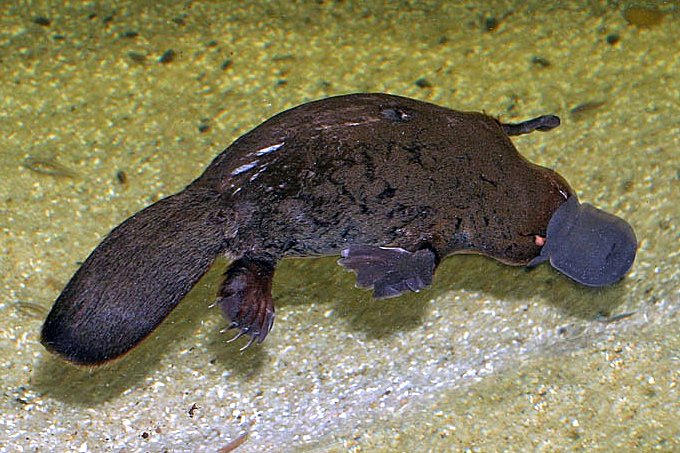
- They lay eggs. A female platypus lays 1–3 soft, leathery eggs and incubates them curled around her body.
- A single opening (cloaca). The name "monotreme" means "single hole": urinary, digestive, and reproductive tracts all open into one cloaca, as in birds and reptiles.
- No nipples. Milk oozes from mammary patches onto the fur, and the young lap it up.
- Electric sixth sense. The platypus bill detects prey's faint electric fields underwater — unique among mammals.
- Reptilian touches: sprawling limb posture, lower body temperature, and teeth only in young platypuses.
Marsupials: The Pouch Mammals
Marsupials (infraclass Marsupialia) — kangaroos, koalas, wombats, opossums, Tasmanian devils — take a middle path. A kangaroo's pregnancy lasts barely a month; the jellybean-sized, blind joey crawls unaided to the marsupium (pouch), latches onto a teat, and finishes most development there over months.

- Short gestation, long pouch life: most development happens outside the womb, attached to a teat.
- Short-lived placenta: marsupials form a choriovitelline (yolk-sac) placenta — bandicoots even develop a true chorioallantoic one — but it lasts only days, so nourishment is mostly post-birth via milk.
- Two uteri: female marsupials typically have a double reproductive tract (two vaginae, two uteri).
- ~330 species, most in Australia and New Guinea; opossums are the American exception.
Placentals: The Placenta Mammals
Placentals (infraclass Eutheria) — humans, dogs, elephants, bats, whales — nourish the fetus through a true placenta during a long gestation, so babies arrive comparatively developed: a newborn elephant weighs over 100 kg, and a foal can run within hours. Pregnancy is prepared and maintained by reproductive hormones such as progesterone and estrogen.
- True placenta: prolonged internal nourishment; the longest gestations in nature (elephants: ~22 months).
- Corpus callosum: the only mammals whose brain hemispheres are linked by this large nerve band.
- Single reproductive tract in females and, in males, testes usually descended into a scrotum.
- ~95% of mammal species — the most successful and widespread mammal group.
Monotremes, Marsupials and Placentals: Difference Table
| Feature | Monotremes | Marsupials | Placentals |
|---|---|---|---|
| Mode of birth | Oviparous (lay eggs) | Viviparous, young born very underdeveloped | Viviparous, young born well developed |
| Gestation / incubation | External incubation of eggs (~10 days; echidna carries the egg in a pouch) | Very short gestation, days to weeks (red kangaroo ~33 days) | Prolonged gestation, weeks to months (elephant ~22 months) |
| Nourishment of young | Egg yolk, then milk | Mostly prolonged milk feeding in pouch | Placenta before birth, milk after |
| Placenta | Absent | Short-lived (yolk-sac; chorioallantoic in bandicoots) | True placenta present |
| Pouch (marsupium) | Absent (echidna has a temporary brood patch) | Present in most | Absent |
| Cloaca | Present (single opening) | Absent (separate openings) | Absent (separate openings) |
| Nipples | Absent (milk patches) | Present (inside pouch) | Present |
| Corpus callosum | Absent | Absent | Present |
| Epipubic (marsupial) bones | Present in both sexes | Present — stiffen the body wall to support the pouch | Absent |
| Body temperature | Lower, about 32°C | About 35°C | About 37°C |
| Dentition | Adults toothless — horny grinding plates (young platypus teeth are lost) | Heterodont; usually replace only a single premolar | Heterodont, two sets of teeth (milk and permanent) |
| Female tract | Paired ducts opening into the cloaca | Double (two uteri) | Single uterus (mostly) |
| Number of species | 5 | ~330 | ~5,000+ |
| Examples | Platypus, echidnas | Kangaroo, koala, opossum | Human, dog, elephant, whale |
Why Three Groups? An Evolutionary Snapshot
The fossil record and DNA agree: monotremes branched off first (~200 million years ago), keeping egg-laying; marsupials and placentals diverged later, both inventing live birth but solving nourishment differently. Australia's long isolation let marsupials and monotremes thrive across its biomes while placentals conquered the rest of the world.
Examiners love one-line identifications: platypus/echidna → monotreme (egg-laying); kangaroo/koala → marsupial (pouch); everything else → placental. The classic traps: (1) "mammals that lay eggs" = monotremes, not marsupials; (2) "corpus callosum present only in" = placentals; (3) monotreme = single opening/cloaca; (4) marsupials have TWO uteri. Study the difference table column by column.
Frequently Asked Questions
What are the three types of mammals?
Monotremes (egg-laying mammals like the platypus), marsupials (pouch mammals like kangaroos), and placentals (mammals nourished by a placenta, like humans). All three produce milk and have hair.
Which mammals lay eggs?
Only monotremes lay eggs: the duck-billed platypus and the four echidna species. Marsupials and placentals give birth to live young.
What is the difference between a marsupial and a placental mammal?
Marsupials give birth to tiny, underdeveloped young that complete development in a pouch; their placenta (usually yolk-sac type, lasting only days) contributes little nourishment. Placentals nourish the fetus through a true placenta during a long gestation, delivering well-developed young.
Do marsupials have a placenta?
Yes — marsupials form a short-lived choriovitelline (yolk-sac) placenta, and bandicoots even a chorioallantoic one, but it functions for only days. Most nourishment happens after birth, through prolonged milk feeding in the pouch.
Which mammals have a corpus callosum?
Only placental mammals — monotremes and marsupials connect their hemispheres through the smaller anterior commissure instead.
Are humans monotremes, marsupials or placentals?
Humans are placental mammals (Eutheria): the fetus is nourished through a placenta during about nine months of gestation, and babies are born well developed.
Practice MCQs
Q1. Egg-laying mammals are called:
- Marsupials
- Monotremes
- Placentals
- Eutherians
Answer: B — Monotremes (platypus, echidnas) are the only mammals that lay eggs; marsupials and placentals give live birth.
Q2. The corpus callosum is present in:
- Monotremes only
- Marsupials only
- Placentals only
- All mammals
Answer: C — Only placental mammals possess a corpus callosum; monotremes and marsupials use the anterior commissure.
Q3. A kangaroo joey completes most of its development:
- Inside the uterus via a placenta
- Inside an egg
- Attached to a teat in the pouch
- In an external nest
Answer: C — The underdeveloped joey crawls to the marsupium, latches onto a teat, and finishes developing there.
Q4. The word "monotreme" refers to:
- Laying a single egg
- A single body opening (cloaca)
- Having one tooth type
- A single mammary gland
Answer: B — Monotreme means "single opening": urine, feces, and reproduction share one cloaca.
Q5. Which of the following is a marsupial?
- Platypus
- Echidna
- Koala
- Armadillo
Answer: C — The koala is a marsupial; the platypus and echidna are monotremes, and the armadillo is a placental.
Q6. Monotremes feed their young milk through:
- Nipples inside a pouch
- Mammary patches without nipples
- A placenta
- Regurgitated food
Answer: B — Monotremes have no nipples; milk oozes from mammary patches onto the fur for the young to lap up.
Q7. A female platypus lays:
- 1–3 soft, leathery eggs
- 10–12 hard-shelled eggs
- A single large egg
- Live young
Answer: A — The platypus lays 1–3 soft, leathery eggs and incubates them curled around her body.
Q8. The platypus bill's unique 'sixth sense' detects:
- Magnetic fields
- Sound waves
- Polarized light
- The faint electric fields of prey underwater
Answer: D — The platypus bill detects prey's faint electric fields underwater — unique among mammals.
Q9. About what percentage of mammal species are placentals?
- About 95%
- About 50%
- About 10%
- About 1%
Answer: A — Placentals make up about 95% of mammal species — the most successful and widespread mammal group.
Q10. Female marsupials typically have:
- A single uterus like placentals
- No uterus at all
- A cloaca
- A double reproductive tract — two vaginae and two uteri
Answer: D — Female marsupials typically have a double reproductive tract: two vaginae and two uteri.
Short Questions
Q1. How do monotremes, marsupials and placentals differ in reproduction? See answer
The three groups represent three answers to the same challenge: turning a fertilized egg into a free-living young. Monotremes are oviparous — the platypus and echidnas lay soft, leathery eggs that are incubated outside the mother's body.
Marsupials are viviparous but cut gestation short: after barely a month, a jellybean-sized joey crawls to the pouch (marsupium), latches onto a teat, and completes most of its development there over several months.
Placentals invest in a long gestation, nourishing the fetus through a true placenta so the young are born comparatively developed — from a foal that can run within hours to a human baby after nine months.
Q2. What does the word "monotreme" mean, and how do monotremes feed their young? See answer
Monotreme means "single opening": the urinary, digestive and reproductive tracts all empty into one cloaca, a design monotremes share with birds and reptiles rather than with other mammals.
Monotremes have no nipples. Instead, milk oozes from mammary patches onto the mother's fur, and the hatchling laps it up — a primitive but fully functional form of lactation.
The platypus takes this further: the mother curls around her 1–3 soft eggs to incubate them, then nurses the young for months, proving that egg-laying and milk production can coexist in one animal.
Q3. Which mammals have a corpus callosum, and how do the others connect their brain hemispheres? See answer
Only placental mammals (Eutheria) possess a corpus callosum — the large band of nerve fibers that directly links the left and right cerebral hemispheres.
Monotremes and marsupials lack a corpus callosum entirely. Their hemispheres communicate through the smaller, more ancient anterior commissure, supplemented by the hippocampal commissure.
This makes the corpus callosum a defining eutherian innovation: examiners frequently test it as the single brain feature that separates placentals from the other two mammal groups.
Q4. Describe the development of a kangaroo joey from birth to independence. See answer
After a gestation of barely a month, the female kangaroo gives birth to a joey the size of a jellybean — blind, hairless, and with only its forelimbs well developed for the climb ahead.
Guided by smell, the newborn crawls unaided through the mother's fur to the marsupium (pouch), where it latches onto a teat; the teat swells in its mouth, locking it in place for weeks of continuous suckling.
Over the following months the joey grows fur, opens its eyes and begins peeking out, eventually leaving the pouch permanently — a striking example of how marsupials shift most development from the uterus to the pouch.
Q5. Which mammal group is the most successful, and what explains its dominance? See answer
Placentals (Eutheria) are by far the most successful mammals, accounting for about 95% of all mammal species — from bats and whales to elephants and humans.
Their success rests on the true placenta: prolonged internal nourishment lets the fetus grow large and well developed before birth, producing competitive young in almost every habitat on Earth.
Supporting advantages include the corpus callosum, a single efficient reproductive tract, and — in most species — advanced parental care, which together helped placentals colonize every continent.
Q6. Why are most marsupials and all monotremes found in Australia? See answer
Australia's long geographic isolation is the key: after it split from Gondwana, its marsupials and monotremes evolved for tens of millions of years with little competition from placental mammals.
About 330 marsupial species — kangaroos, koalas, wombats, Tasmanian devils — radiated across the continent, while the five monotreme species (platypus plus four echidnas) survived only in Australia and New Guinea.
Elsewhere, placentals outcompeted most marsupials; the opossums of the Americas are the notable exception — a reminder that isolation, not superiority, shaped Australia's unique mammal fauna.
Read next
- Weisbecker, V. et al. Comparative anatomy of neonates of the three major mammalian groups (monotremes, marsupials, placentals). Frontiers in Zoology. PMC5696127
- Suárez, R. et al. A pan-mammalian map of interhemispheric brain connections predates the evolution of the corpus callosum. Proceedings of the National Academy of Sciences (2018) — confirms that monotremes and marsupials connect the hemispheres through the anterior commissure while eutherians evolved the corpus callosum. See the overview at Encyclopaedia Britannica — Corpus callosum.
- Encyclopaedia Britannica — Mammal: reproduction, monotremes, marsupials and placentals.
Comments
Leave a comment